← All articles
Science
After the record summer of 2026, French people adapt their homes: what the facts say about the heatwave “nightmare”
The franceinfo article of September 4, 2026 compiles testimonials from readers who, after an exceptionally hot summer, are considering moving, installing air conditioning or greening their homes. Official data from Météo-France confirm that summer 2026 was the hottest ever recorded in France since 1900, with records for heatwaves, tropical nights and fires, which makes the factual context solid, even if individual choices remain anecdotal and not quantified at the national level.
By Georges Darmond, published on 04.09.2026
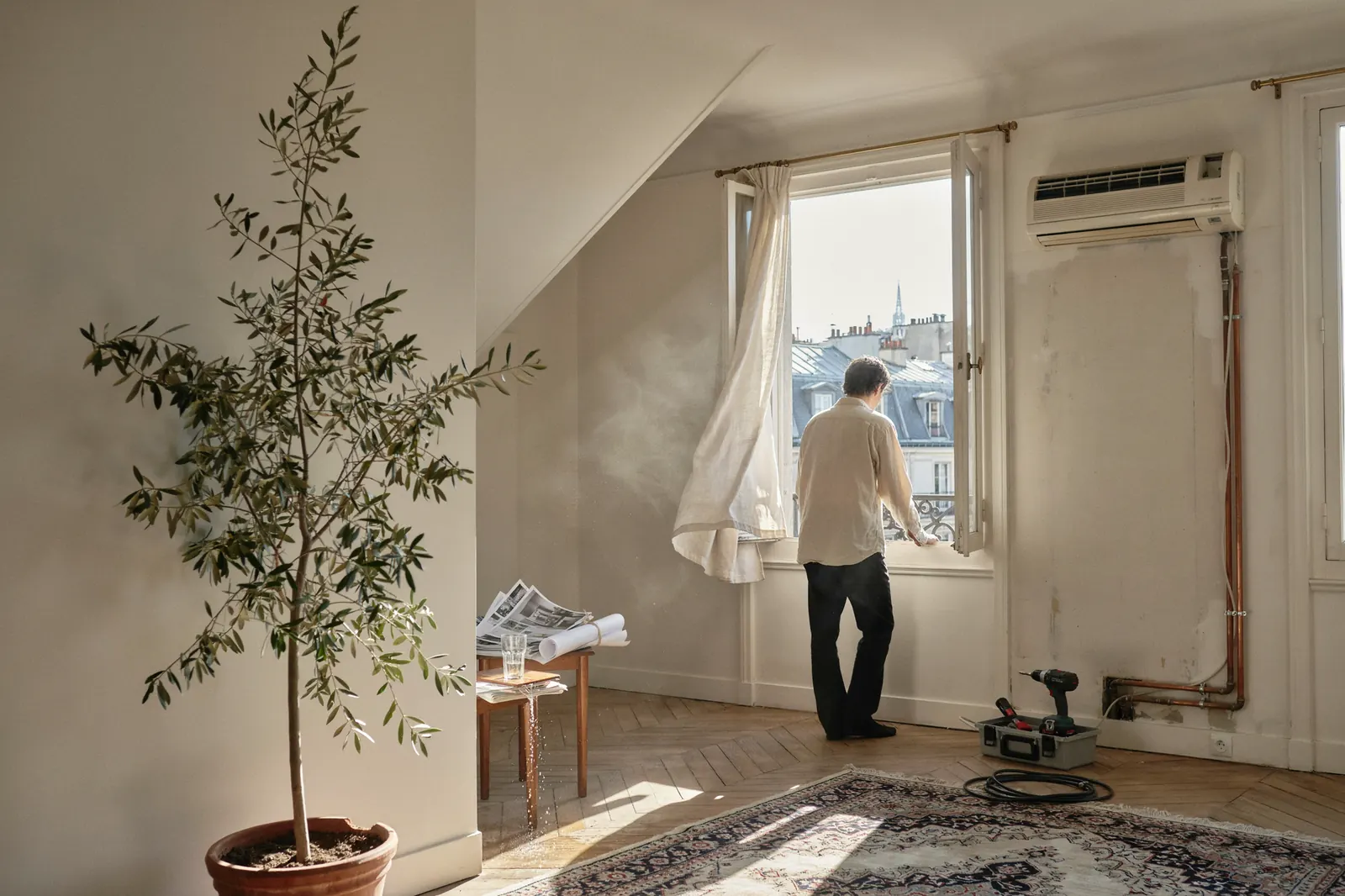
Generated illustration Illustration générée — ne constitue pas une photographie réelle.
The franceinfo article, published on September 4, 2026 and signed by Yann Thompson, is based on a call for testimonials. It portrays French people who, after experiencing what they describe as a summer “nightmare,” are seeking to adapt their homes to coming heatwaves: moving to cooler areas, installing air conditioning or greening. The text mixes personal accounts and references to meteorological data. It does not claim to provide a national statistical overview, but illustrates individual reactions while expressing hope for collective and political responses.
Context and origin of the buzz. The meteorological summer of 2026 (June-August) was marked by a succession of extreme episodes. Météo-France presented its official assessment on September 3, 2026: an average temperature of 24.0 °C, or +3.6 °C relative to the 1991-2020 normals, making it the hottest summer since records began in 1900, ahead of 2003 (+2.7 °C) and 2022 (+2.3 °C). The anomaly for maximum temperatures reaches +4.8 °C. The country experienced 53 heatwave days (compared with 33 in 2022), spread across several episodes. An early and intense wave from June 17 to 30 placed up to 72 departments under red heatwave vigilance, a record. About 90% of the territory experienced 35 °C or more at least once, and 45% experienced 40 °C at least once. The 40 °C threshold was crossed 178 times at weather stations. Local records were broken, including in the West and the North. Soil drought was unprecedented, the rainfall deficit close to 40%, and 2026 looks set to be the year with the largest number of hectares burned. Record ocean temperatures were also observed. Météo-France and the Minister for Ecological Transition Monique Barbut stressed that this summer would have been virtually impossible without human-caused climate change, even if it remains rare in the current climate. Hot spells continued into September.
Established facts and cross-checked sources. Several elements cited in the article correspond to verifiable data. In Bordeaux, a record of 42.5 °C was indeed recorded in late June (notably on June 23), confirmed by weather archives. In the Vaucluse, Avignon experienced a high number of tropical nights (minimum temperature ≥ 20 °C): the article mentions more than 40 nights since the start of summer, drawing on Météo-France via ICI Vaucluse; local reports put the figure at about 40 tropical nights and 46 days above 35 °C in Avignon, while Orange recorded 48 days above 35 °C. These figures fit within an exceptional summer for the South-East. The fires in Gironde and the Landes in July 2026 ravaged tens of thousands of hectares (estimates around 40,000 to more than 47,000 hectares for the main fires in the Landes de Gascogne massif), led to mass evacuations (up to 220,000 people mentioned) and recalled the trauma of 2022. Smoke reached the Bordeaux urban area. Santé publique France reported significant excess mortality: about 1,000 excess deaths in the first days of the late-June peak, then an estimate of at least 5,764 excess deaths for the period from June 17 to July 2 in the affected departments (+36%), with a marked impact on those over 65 and a rise in deaths at home. Broader provisional assessments for the summer have mentioned several thousand heat-related deaths (around 7,300 in some media estimates still not consolidated). These elements are documented by Météo-France, Santé publique France, prefectures and reference media (Ouest-France, Le Monde, BFMTV, Les Échos, etc.).
The testimonials. The article relates concrete cases: a couple leaving Avignon for the Ariège after tropical nights and the closure of a business; a resident of southern Gironde selling his house because of the fires and the stress, to return to Brittany; a resident of a Bordeaux social housing unit under the roof seeking a transfer to the Arcachon basin after feeling unwell; a couple in Mulhouse investing 6,000 euros in air conditioning; others hesitating over air conditioning because of its environmental impact or betting on greening and cool islands in condominiums. These accounts are presented as responses to a call for testimonials. They illustrate individual adaptation strategies (moving to higher altitude or a cooler coastline, air conditioning, shade, Mediterranean plantings). They also express frustration at the lack of public aid and adapted urban planning, as well as hope for a “more collective and political response,” including with a view to the presidential election.
What is accurate, exaggerated or uncertain. The label “nightmare” is subjective but proportionate to the exceptional intensity confirmed by official data. The local weather references (Bordeaux, Avignon, Gironde fires) are broadly accurate and cross-checked. By contrast, the article does not quantify the scale of the housing adaptation phenomenon: these are selected testimonials, not a representative survey. At this stage, there are no national statistics on the number of climate-related moves, air-conditioning installations or greening projects specifically triggered by summer 2026. The debates on air conditioning (comfort and health versus energy consumption, heat rejection and refrigerants) are addressed in a balanced way in the text, without a single conclusion. Urban-planning difficulties (works declarations, condominium rules) are real and often documented obstacles, but the scale of workarounds remains anecdotal. Excess mortality and the fires are established facts, even if the full health and forest assessments for the summer may still be refined.
Contradictions and blind spots. On the one hand, the urgency of adapting homes to summers that will become more frequent according to climate projections; on the other, inequalities: not everyone can afford to move or install air conditioning (high cost, constraints in social housing or condominiums). Air conditioning can locally worsen urban heat and electricity demand. Passive solutions (insulation, greening, orientation) are often preferred by experts for the long term, but slow to roll out. The government has announced it wants to strengthen adaptation, with promises of announcements in September 2026, after criticism of unpreparedness. Blind spots include the fate of the most vulnerable (homeless people, isolated individuals), the impact on the property market in at-risk areas (Landes, South-East), and the lack of hard data on internal climate migration. Social networks relay both exasperation at the heat and polarized debates on air conditioning versus sobriety.
Provisional conclusion. The central claim of the article — that after an exceptional summer of 2026 described as a nightmare, some French people are seeking to adapt their homes to future heatwaves, through moving, air conditioning or greening, while hoping for collective action — is broadly faithful to the meteorological and health facts established by Météo-France and Santé publique France. The testimonials illustrate plausible and documented reactions in the context of a heat record. However, they remain individual and do not allow a conclusion of a massive measurable trend. The climate event is beyond dispute; the scale and effectiveness of individual adaptations, as well as the political response, remain to be assessed over time. The available evidence justifies the journalistic treatment, without excessive sensationalism, while underlining the need for more systematic data and adaptation policies equal to the stakes.

Profile
Georges Darmond
Journaliste politique mediasJe m'appelle Georges. Je suis née dans la région parisienne où j'exerce mon métier de journalisme depuis 1 an dans le domaine du de la politique, médias, social. Aujourd'hui, je m'intéresse tout particulièrement à aux promesses non tenues, aux fausses informations, aux affirmations douteuses qui influencent notre quotidien, nos espoirs et notre espérance dans le futur.
LinkedIn ↗