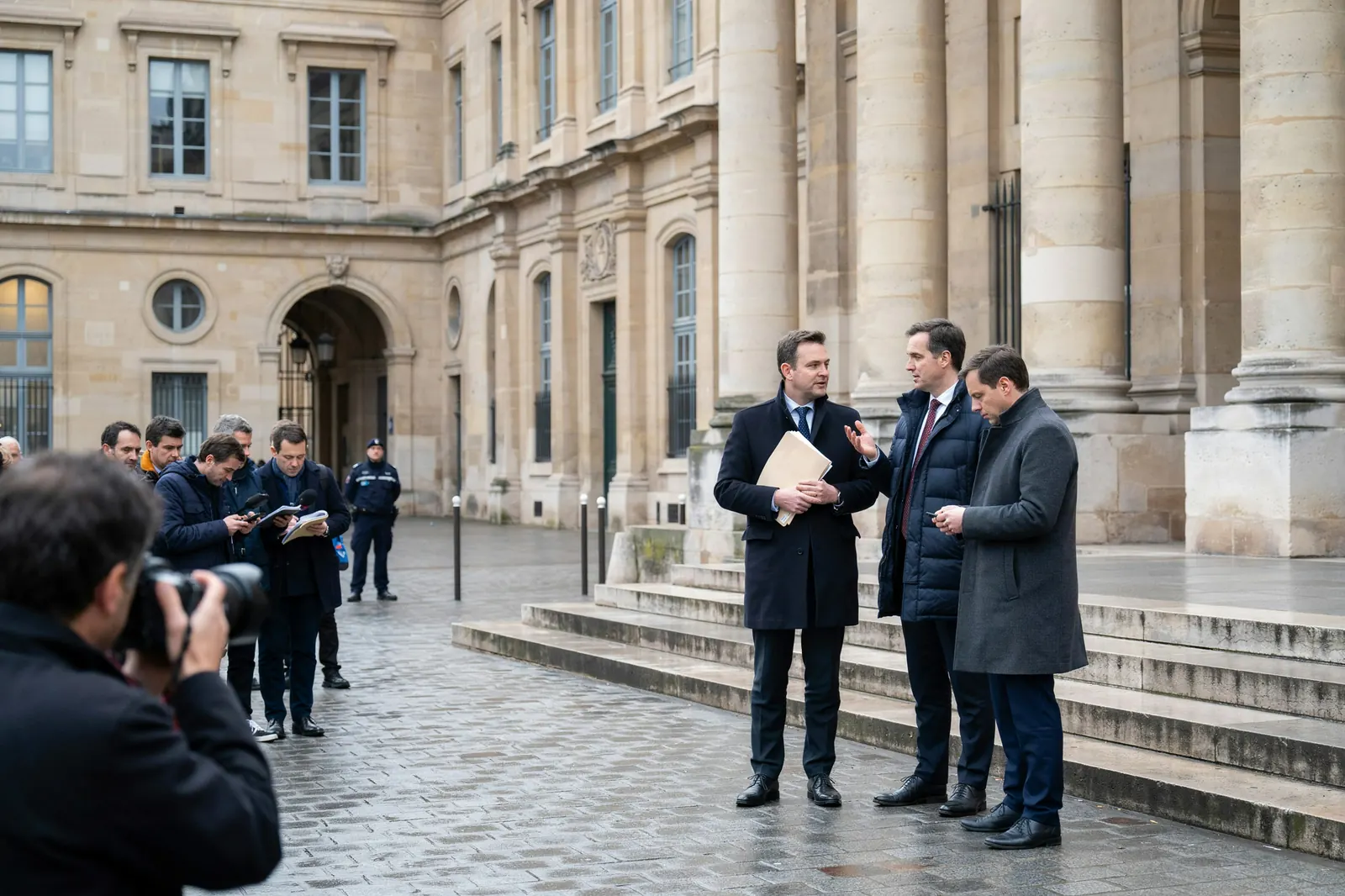
Two lawsuits, the same reproach: the French justice system allegedly dragged its feet too much in the Epstein case made in Paris. Ebba Karlsson, a former Swedish model, and Innocence en Danger are each striking from their side. The State finds itself doubly in the dock for "gross negligence". The buzz is launched. Remains to be seen what it really holds.
Karlsson had her summons served on August 21, 2026. Her lawyers, William Bourdon and Colomba Grossi, are seeking 50,000 euros in damages. Initial hearing scheduled for 2027. She accuses Daniel Siad of having raped her in the 1990s in France, after luring her from Sweden via Monaco with the promise of a career. She recognized him in photos from the Epstein files published in early 2026. Complaints filed, including a formal one in February. Heard by the OCRTEH in March. And then not much more in terms of custody or confrontation. Siad dies on July 20 in Colombes. End of public action concerning him. "There was the opportunity to question him, but nothing was done for months," she says. The point snaps: the suspect dies out, the complaint lights up against the State.
Innocence en Danger struck earlier, on July 31, through Me Mathias Darmon. 15,000 euros claimed. The association, which had pushed for the opening of an investigation as early as 2019, denounces a "succession of procedural shortcomings", excessive delays and a "defective functioning". It recalls the dismissal in 2023 of the first proceedings, the suicide in detention of Jean-Luc Brunel in 2022, and now Siad. Paris hub of the trafficking? Links with French modeling, Epstein's travels on avenue Foch: the scene has long been set. French justice allegedly watched the hourglass rather than accelerating. There's the grievance, served without frills.
The established facts boil down to a few dates. American files released, complaints pouring in. The Paris prosecutor's office opens or reactivates framework investigations for trafficking and criminal conspiracy. Siad, mentioned thousands of times in the documents, targeted by several complaints for rape and trafficking, was the subject of special techniques, including wiretaps. Prosecutor Laure Beccuau clarified that they had not provided elements justifying an immediate arrest. Autopsy: no traces of recent violence, impaired health condition, traces of an old heart attack. Exact cause still under analysis. The investigation into the network continues, 24 women are said to have come forward. Siad contested everything. His lawyer said he was innocent. Presumption of innocence intact to the end. But for the complainants, the absence of questioning before the final curtain looks like a slammed door.
What circulates as rumor or speculation deserves the brakes. Karlsson mentioned fears of "elimination" not heard by the authorities. Hypothesis. Nothing proven. The autopsy does not point to a crime. The investigation into the causes of death continues. Turning a death into a conspiracy is easy on social networks; harder before a judge. Same for the blind spots: why no faster questioning? The prosecutor's office responds insufficient evidence. The civil parties cry inertia. The two versions coexist. Neither wins yet. And Brunel, dead in 2022, resurfaces like a ghost that feeds the feeling of impunity. Justice opened, investigated, sometimes dismissed. It has not elucidated everything. Surprise in a case of this caliber.
The contradictions jump out. On one side, victims who say they alerted early, including as early as 2020 for certain leads on Siad. On the other, an institution that invokes the time of the investigation, international complexity, the absence of serious and corroborating evidence to place in custody. The lawsuit for gross negligence, a classic mechanism of State liability, is not a conviction. It is a request to establish a dysfunction. The court will say. In 2027. Until then, the media noise does its work: one sues the State as one sues a service offender. It relieves. It does not yet judge the substance.
Provisional conclusion: the lawsuits are real, dated, sourced by AFP and the press. The grievances of delay and inaction on Siad rest on concrete elements – complaint, death before formal questioning. The State and the prosecutor's office counter with the legal framework of investigations and the continuation of investigations into the network. Nothing proves at this stage a "gross negligence" in the legal sense. Nothing erases either the plaintiffs' feeling of injustice. The French Epstein case advances at its own pace, between past dismissals, deaths along the way and future hearings. Judicial truth, for its part, does not like the sprint. It prefers the marathon. And the marathon, sometimes, leaves runners on the side of the road.

Profile
Georges Darmond
Journaliste politique mediasJe m'appelle Georges. Je suis née dans la région parisienne où j'exerce mon métier de journalisme depuis 1 an dans le domaine du de la politique, médias, social. Aujourd'hui, je m'intéresse tout particulièrement à aux promesses non tenues, aux fausses informations, aux affirmations douteuses qui influencent notre quotidien, nos espoirs et notre espérance dans le futur.
LinkedIn ↗