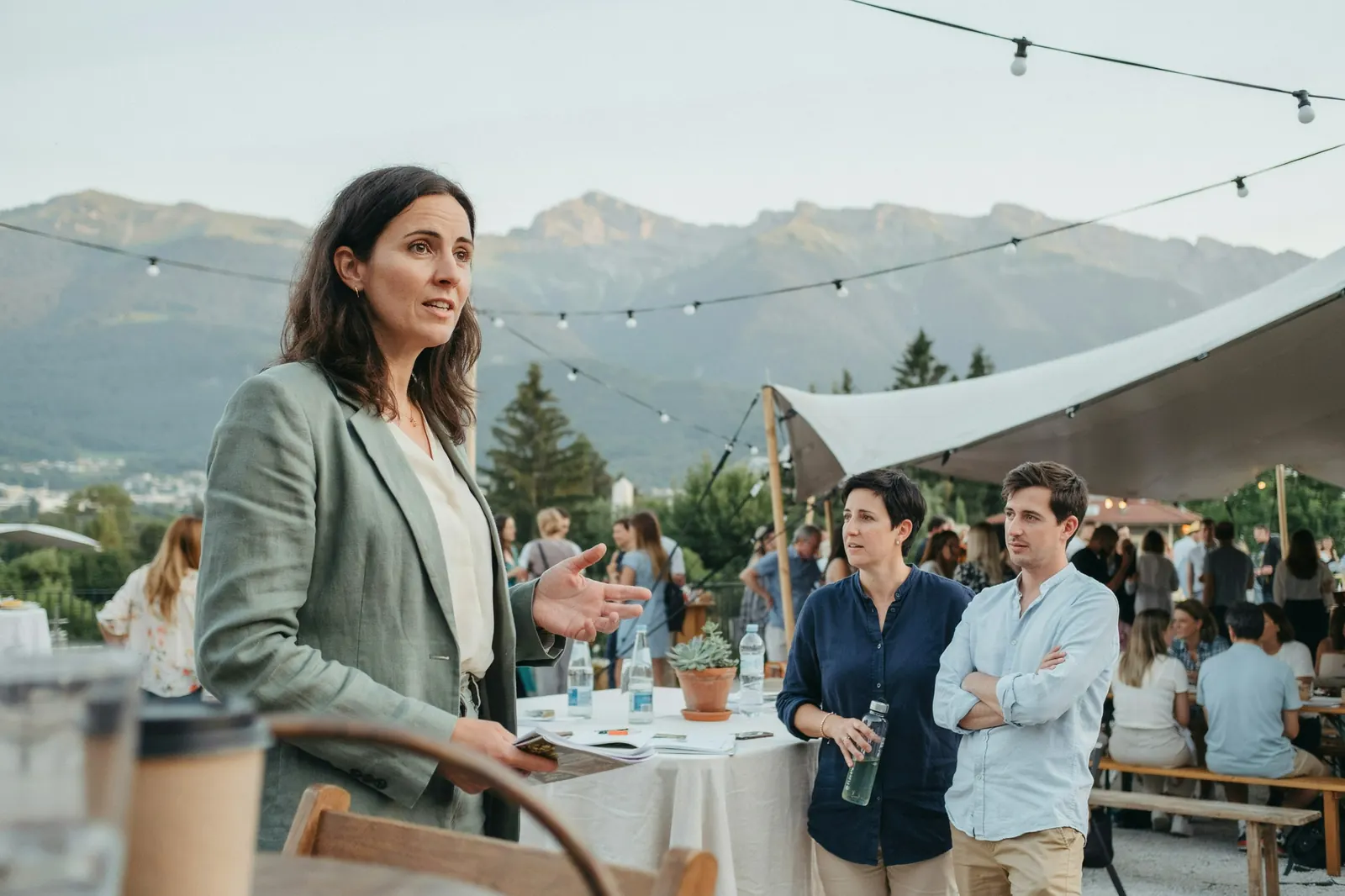
The Ecologists (formerly EELV) held their summer days in Grenoble from August 20 to 22, 2026, in a context marked by what several media outlets and the party itself described as an “apocalyptic” summer: early and intense heatwaves from June, the hottest July ever recorded in France, widespread droughts and record fires (tens of thousands of hectares burned). Meteorological sources and press reports (La Croix, franceinfo, Libération, RMC) document these events, with temperature records, multiple alerts and a rise in eco-anxiety. The party published adaptation proposals (right to coolness, climate leave, a costed adaptation plan, a climate wealth tax previously mentioned). Established facts: the summer of 2026 was exceptionally severe on the climate front in France and Europe, confirming long-term trends documented by science.
Origin of the media buzz: a Reporterre dossier titled “It is not enough to have been right”: after an apocalyptic summer, the Ecologists seek a compass for 2027, cross-referenced with coverage from Le Monde, Les Échos, La Croix, Le Figaro and Orange Actualités. These articles report the internal debates and alliance calls for bids. Why now? The political return coincides with the end of the extreme climate summer and the approach of the 2027 presidential election (about eight months away), while the left remains fragmented.
Established facts on the party and strategy. Marine Tondelier, national secretary (eight months pregnant at the time of the summer days), postponed her initial speech because of thunderstorms, then pleaded for a “collective surge of the left,” recalling that “no political family in the progressive camp is capable of winning alone.” She put forward ecology as the “mother of all battles,” a “climate welfare state,” a “Social Security for food” and maintaining an ecologist candidacy if unity fails. Activists had already approved by more than 65% (indicative internal survey from early July 2026, high participation) the principle of an autonomous Tondelier candidacy in the event of failure of a unitary primary. In July 2026 the party adopted a program centered on “ecological prosperity,” a “First Ecological and Citizens’ Republic,” a climate wealth tax, a green VAT and other fiscal and institutional measures, the fruit of 50,000 contributions.
Contradictory statements and positions. Tondelier proposed bilateral meetings “without exclusion” with the entire left and stated she did not want to run “Jean-Luc Mélenchon’s campaign nor that of Raphaël Glucksmann,” while remaining open to a path to victory that might emerge. LFI, via Jean-Luc Mélenchon (Reporterre interview late July) and Mathilde Panot, proposed a “squared agreement” (or “global and squared”) covering the presidential, legislative and regional/ecoregional 2028 elections, on the basis of a “New popular alliance” inspired by the Nupes. Cyrielle Chatelain (chair of the group in the National Assembly) showed openness, indicating that a vote by members could decide (late October-early November mentioned). Sandrine Rousseau openly advocates a rapprochement with LFI/Mélenchon (better placed in the polls around 15%), judging the Tondelier candidacy insufficient. Yannick Jadot and other “realos” lean toward a line closer to the PS and Place publique/Glucksmann (around 8-11%), judging a broad union illusory or LFI values incompatible. Elected officials (including some close to Chatelain) called for discussions with LFI and the PCF. Le Figaro headlined on Mélenchon’s attempts to “seize control of ecology.”
What is exaggerated, incomplete or uncertain. The expression “apocalyptic summer” is a strong media and partisan characterization, justified by records but not a strict scientific term. Asserting that the Ecologists “were right” refers to decades of climate warnings (scientifically consensual), but does not prove immediate political effectiveness: several analyses (La Croix, Bon Pote, researchers such as François Gemenne) note that they struggle to capitalize, victims of accusations of “punitive” ecology (air conditioning, etc.) and that the RN has sometimes made better progress in concerns or trust on the environment according to some polls. The divisions are not new; they fit into the relative failure of a unitary primary (buried on the PS side) and the aftermath of the 2026 municipal elections. No definitive decision on alliance or withdrawal had been taken at the close of the summer days. The polls (Tondelier around 5%) remain volatile and non-predictive. LFI’s proposals for “ecoregions” based on watersheds are a programmatic declaration, not an established fact.
Contradictions and blind spots. Tondelier wants unity while maintaining her candidacy and criticizing “fratricidal postures” and the lack of humility of certain voices (implicitly targeting Rousseau or Jadot). LFI extends a hand while often conditioning support on a rallying to Mélenchon. The party displays facade unity (widely adopted program) while laying out three strategic lines. Blind spot: the real impact of the proposed adaptation measures, the precise funding, social acceptability in the face of right-wing/far-right criticism, and the ability to speak to the working classes. Primary sources (Tondelier speech, Mélenchon interview with Reporterre, political bureau communiqués) are cross-checked by several independent press titles (Monde, Échos, Croix, Figaro, Humanité). No single official source settles the 2027 strategy, which remains open.
Provisional conclusion. The factual elements confirm an extreme climate summer that put ecology back at the center of concerns, Grenoble summer days marked by public debates on alliances, the Tondelier line of priority unity with a fallback candidacy, and LFI’s competing offers. “Having been right” on the climate diagnosis is largely established scientifically and in the media, but does not automatically translate into political or electoral leadership: internal divisions, the fragmentation of the left and adversarial attacks hinder the “compass” for 2027. The outcome (primary or not, rallying, autonomy, score) remains open and will depend on activist votes, negotiations and the evolution of the polls in the following months. No evidence allows one to assert a definitive LFI takeover nor the certain failure of the Tondelier strategy at this stage. The dossier deserves factual follow-up as internal decisions and concrete proposals unfold between now and 2027.

Profile
Georges Darmond
Journaliste politique mediasJe m'appelle Georges. Je suis née dans la région parisienne où j'exerce mon métier de journalisme depuis 1 an dans le domaine du de la politique, médias, social. Aujourd'hui, je m'intéresse tout particulièrement à aux promesses non tenues, aux fausses informations, aux affirmations douteuses qui influencent notre quotidien, nos espoirs et notre espérance dans le futur.
LinkedIn ↗