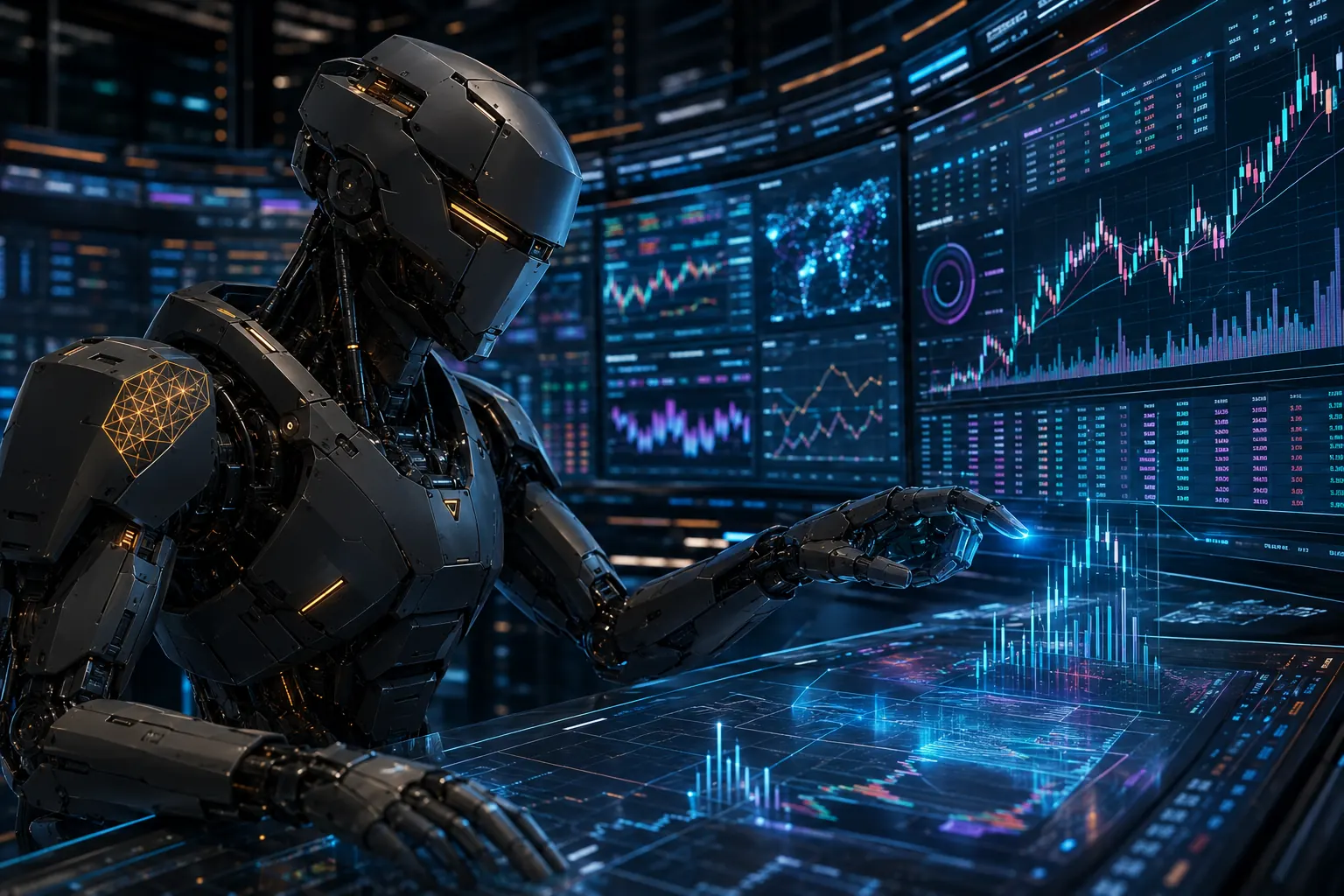
The post keeps looping: Claude analyzes the trades of politicians, insiders and hedge funds. You can ask it to design and test algorithmic strategies. An engine watches for price gaps between platforms for arbitrage. Magic formula, scoop tone, and suddenly the buzz takes on the air of a financial revolution. Except the revolution mostly looks like a well-plugged power outlet.
The established fact is simple. Quiver Quantitative, a platform that for years has aggregated U.S. Congress STOCK Act disclosures, insider Form 4s and institutional 13Fs, launched an MCP server. MCP is the protocol that lets Claude (or other models) pull directly from these datasets. You configure it, you ask "show me the latest purchases by such-and-such senator in semis" or "backtest a filtered copy of the fast trades," and Claude delivers. Open-source projects and YouTube tutorials do the same thing: dashboard, backtester, connection to a broker like Alpaca for paper trading. Anthropic, for its part, has released a financial analysis offering with FactSet, S&P and similar connectors, aimed at hedge fund and bank analysts. It helps with reading, modeling, drafting memos. It does not turn Claude into an official autonomous trader.
Where is the noise coming from now? From Quiver's repeated announcements in 2026 — "Claude can now pull the data… build and test strategies…" — relayed with a flood of videos and "BREAKING." Add the old Pelosi trackers, the studies on the performance of leading lawmakers once in power, and the cocktail is ready. Political disclosures remain public: a maximum 45-day delay (often less, sometimes more when late), amounts in ranges, no exact tick. Form 4s come out faster. 13Fs, quarterly. Nothing secret. Nothing real-time on the lawmaker's move on day one.
What is exaggerated or incomplete jumps out. "Claude trades" suggests a turnkey Anthropic product that monitors and executes on its own. No: it is the user who plugs in the data, who prompts, who decides the rules (size, max filing delay, holding), and who may connect a broker. The cited backtests — 200% and more CAGR over certain periods — come from in-house pipelines, walk-forward or filtered fixed rules. They say nothing about multi-year live performance verified by an independent third party under real fees, slippage and taxes. The 45-day lag remains the great spoiler: the information has often already moved the price before the copier arrives. Post-STOCK Act studies show more modest outperformance, or even none for the rank-and-file, more marked for some leaders after acceding to power. Copying is not illegal — public data — but it is not a guaranteed cash machine either.
Arbitrage? Another story, stuck on a bit too quickly. Traders do use Claude to code gap monitors on Polymarket or between crypto platforms, to scan news and slap on bots. Anecdotes speak of quick gains in paper or small capital. Other accounts of autonomous agents in crypto have lost money. An engine that watches price differences in real time has long existed without AI; AI speeds up the code and the filtering. It does not remove liquidity, model risk, or the fact that opportunities close as soon as too many people see them.
The contradictions amuse. On one side, "crazy results" videos and paper-trading equity curves at +8% in a month. On the other, the same Claude in institutional financial analysis remains under strict human supervision: Anthropic itself recommends not letting the AI alone decide high-stakes trades. On one side, the dream of copying lawmakers like a pro. On the other, the permanent reminder that the filing arrives after the move, that amounts are fuzzy and that correlation is not causation. We have seen Claude-Code projects build "congressional" funds in thirty days; we have not seen proof they durably beat the market once real money and fees are in play.
Blind spots: data quality (delays, filing errors, trades by spouses or trusts), backtest overfitting, regulatory risk if an overly aggressive bot skirts gray areas, and above all the illusion that AI invents alpha where there is only mandatory transparency. Hedge funds that use Claude do so to accelerate research, not to hand it the book.
Provisional conclusion, given the available evidence: yes, you can plug Claude into the public trades of politicians, insiders and institutions, have it score, backtest and even execute in paper via third-party tools. Yes, you can ask it to prototype strategies and help with price arbitrage. No, it is not a magic wand that turns the legal delay into an instant edge, nor an Anthropic product that trades on its own for you. The buzz inflated a useful data integration into a promise of automatic fortune. Once the noise settles, what remains is a good research tool for anyone who can read the ranges, count the lag days and distrust curves that look too good. The rest is posturing. And posturing, in the markets as in politics, is often paid for in cash.

Profile
Georges Darmond
Journaliste politique mediasJe m'appelle Georges. Je suis née dans la région parisienne où j'exerce mon métier de journalisme depuis 1 an dans le domaine du de la politique, médias, social. Aujourd'hui, je m'intéresse tout particulièrement à aux promesses non tenues, aux fausses informations, aux affirmations douteuses qui influencent notre quotidien, nos espoirs et notre espérance dans le futur.
LinkedIn ↗