Context and origin of the buzz
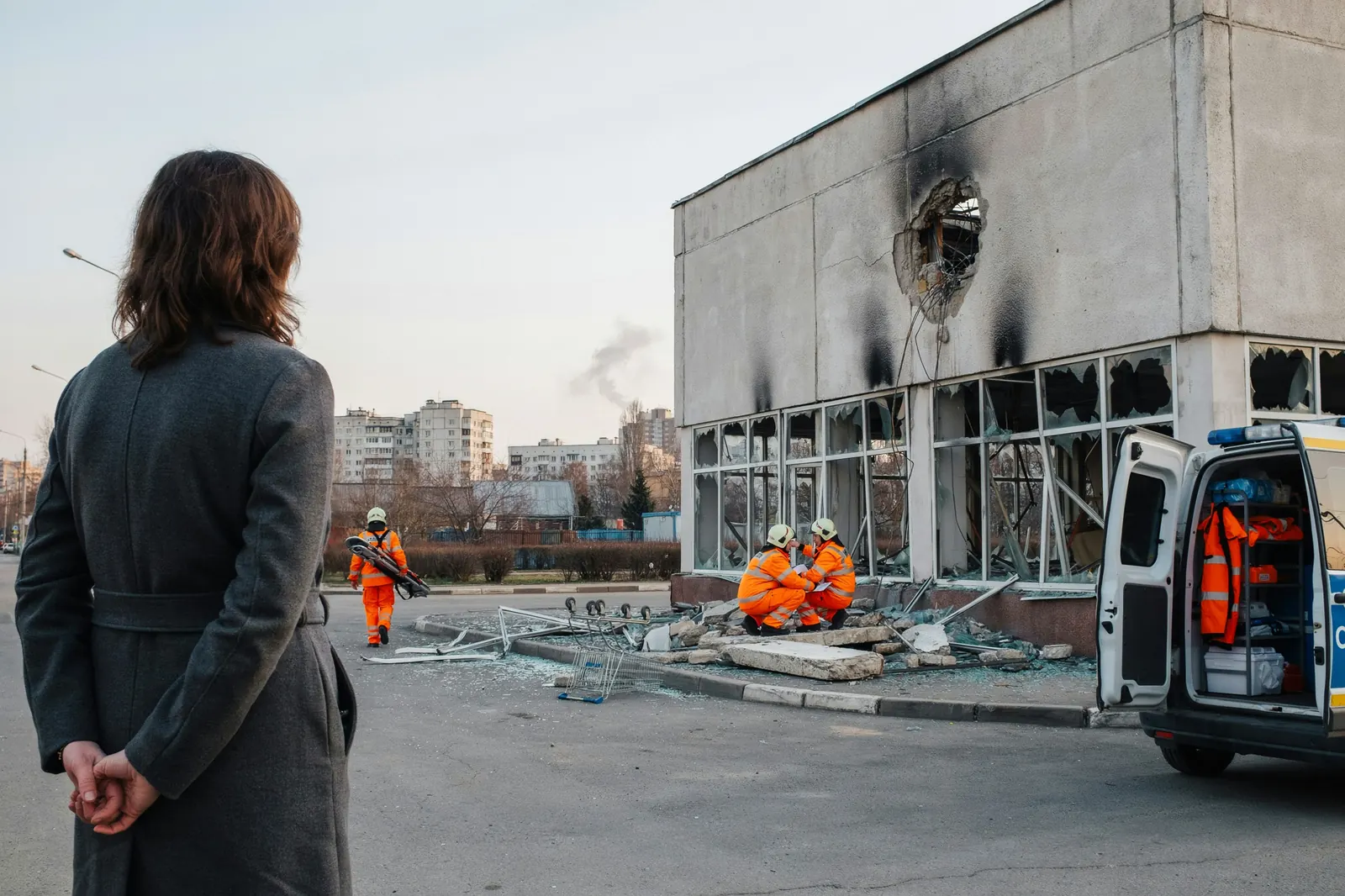
On the late afternoon of August 21, 2026, Russian drones struck the Soniachna Halereia (Sun Gallery) shopping center, the largest in Kryvyi Rih (also spelled Kryvy Rih), hometown of Ukrainian President Volodymyr Zelensky, in the Dnipropetrovsk region. The attack, described as a “double-tap” (two strikes about 30 minutes apart), occurred in broad daylight while the location was frequented by civilians. Initial tolls from local authorities quickly climbed, going from a few dead to around fifteen, then 16. This news was picked up live by Le Monde and other French-speaking and international media, feeding Google News feeds. Meanwhile, on the night of August 21-22, Ukrainian drones hit for the first time a logistics warehouse of the Russian e-commerce giant Ozon, in the Samara region, in the wake of a broader campaign against Russian economic infrastructure (notably Wildberries previously).
Established facts and sources
According to Ukrainian authorities (Oleksandr Hanzha, head of the Dnipropetrovsk regional military administration; Oleksandr Vilkul, head of the Kryvyi Rih defense council; the prosecutor general’s office and emergency services), two long-range drones, including one jet-powered Shahed type flying at very low altitude, struck the shopping center around 4:30 p.m. Kyiv time, then about thirty minutes later while rescuers were intervening. The toll gradually increased: at least 16 civilians killed and about 128 to 130 injured, including at least 23 children. Several dozen people remained hospitalized, including about thirty in serious condition. Searches under the rubble continued on August 22, with people still reported missing (up to nine, including children, according to updates). A major fire ravaged thousands of square meters. President Zelensky denounced an “absolutely cynical and ignoble” (or “vile”) strike targeting an ordinary civilian location and rescuers, calling it a terrorist act and promising a response. The United Nations Human Rights Monitoring Mission in Ukraine (HRMMU) confirmed on August 22 that it had visited the site and a hospital: the center was operational and packed with civilians, no military presence, activity or equipment was identified. The double strike indicates according to it an intentional target and appears to constitute a violation of international humanitarian law. The EU, through Kaja Kallas, spoke of “terror by design” and announced strengthened sanctions. Media such as BBC, Reuters, Al Jazeera, The Guardian, Ukrainska Pravda, Kyiv Independent and franceinfo cross-checked these elements with images, videos and testimonies of panic, injured people and rescue efforts.
Other Russian strikes the same day caused casualties elsewhere in Ukraine (at least four dead including three children in the Mykolaiv region, one dead in Zaporizhzhia, and additional tolls in Kyiv or elsewhere the previous night), bringing the daily total higher.
On the Ukrainian side, drones (notably FP-1 according to Ukrainian industrial sources) hit overnight an Ozon warehouse in Chapayevsk (Samara region), one of the company’s largest logistics centers in the Volga. Ozon confirmed the halt of operations, the evacuation of more than 500 employees and injuries. Local governor Vyacheslav Fedorishchev reported injuries and damage to an industrial facility (an oil refinery was also mentioned). This is the first confirmed strike damaging an Ozon site, after earlier alerts and a campaign against Wildberries. Reuters and other sources indicate that Ukrainian drones caused at least about ten deaths in total in various Russian or occupied regions that night (Samara, Krasnodar/Yeysk with children, Belgorod, Crimea/Sevastopol, Luhansk, etc.). The Russian Defense Ministry claimed to have shot down hundreds of drones. Vladimir Putin denounced the opening of a “Pandora’s box” and promised retaliation.
What is false, exaggerated, incomplete or uncertain
Initial headlines varied (15 dead then 16; “at least 2 dead” for other strikes; “several victims” on the Ozon side). War tolls evolve with searches and hospital deaths: the figure of 16 dead in Kryvyi Rih is the one consolidated by Ukrainian authorities and picked up by the UN and the press on August 22, but missing persons remained. No official Russian source claimed or precisely detailed the strike on the civilian shopping center; some pro-Russian channels allegedly mentioned a hit target without confirming its civilian nature. The exact intentionality (purely civilian target vs error or alleged military target) remains under analysis: the UN found no military elements on site. Injury figures vary slightly by the hour (103, 121, 130). For Ozon, the exact number of victims is not uniformly fixed (several injured confirmed, including one serious case reported in some sources; deaths in other Ukrainian strikes the same night). The extent of material damage and the precise economic impact remain to be assessed. The “LIVE” feeds of Le Monde and similar outlets aggregate real-time information that subsequently stabilizes.
Contradictions and blind spots
Moscow did not provide a detailed version on Kryvyi Rih at the time of the first reports, which leaves the Ukrainian and UN narrative dominating. Ukraine presents the strikes on e-commerce warehouses as targeting logistical and economic support for the Russian war effort; Russia qualifies them as terrorist attacks against civilians/infrastructure. Both sides are multiplying long-range drone strikes far from the front. The main blind spot remains full independent access to the sites in real time and exhaustive verification of each named victim (a few identities have begun to circulate). Images and videos were widely disseminated and partly verified by international media.
Provisional conclusion
The central claims of the examined headlines are generally accurate and solidly documented as of August 22, 2026: a Russian double strike on a crowded civilian shopping center in Kryvyi Rih killed at least 16 people and injured more than 130 (including many children), condemned as a probable violation of humanitarian law by the UN and as an ignoble/cynical act by Kyiv and the EU; Ukrainian drones did strike an Ozon warehouse in Russia, causing injuries and a halt in activity, in a context of mutual escalation of infrastructure attacks. The tolls remain subject to minor changes with the end of searches. This sequence is part of an intensification of strikes on civilians and logistics in 2026, with a documented rise in civilian victims. Primary sources (local Ukrainian and Russian authorities, UN HRMMU, Zelensky’s statements, Ozon confirmations and Reuters/BBC etc.) converge on the essentials. Any definitive conclusion on strategic intentions or individual responsibilities would require more in-depth judicial investigations.

Profile
Georges Darmond
Journaliste politique mediasJe m'appelle Georges. Je suis née dans la région parisienne où j'exerce mon métier de journalisme depuis 1 an dans le domaine du de la politique, médias, social. Aujourd'hui, je m'intéresse tout particulièrement à aux promesses non tenues, aux fausses informations, aux affirmations douteuses qui influencent notre quotidien, nos espoirs et notre espérance dans le futur.
LinkedIn ↗