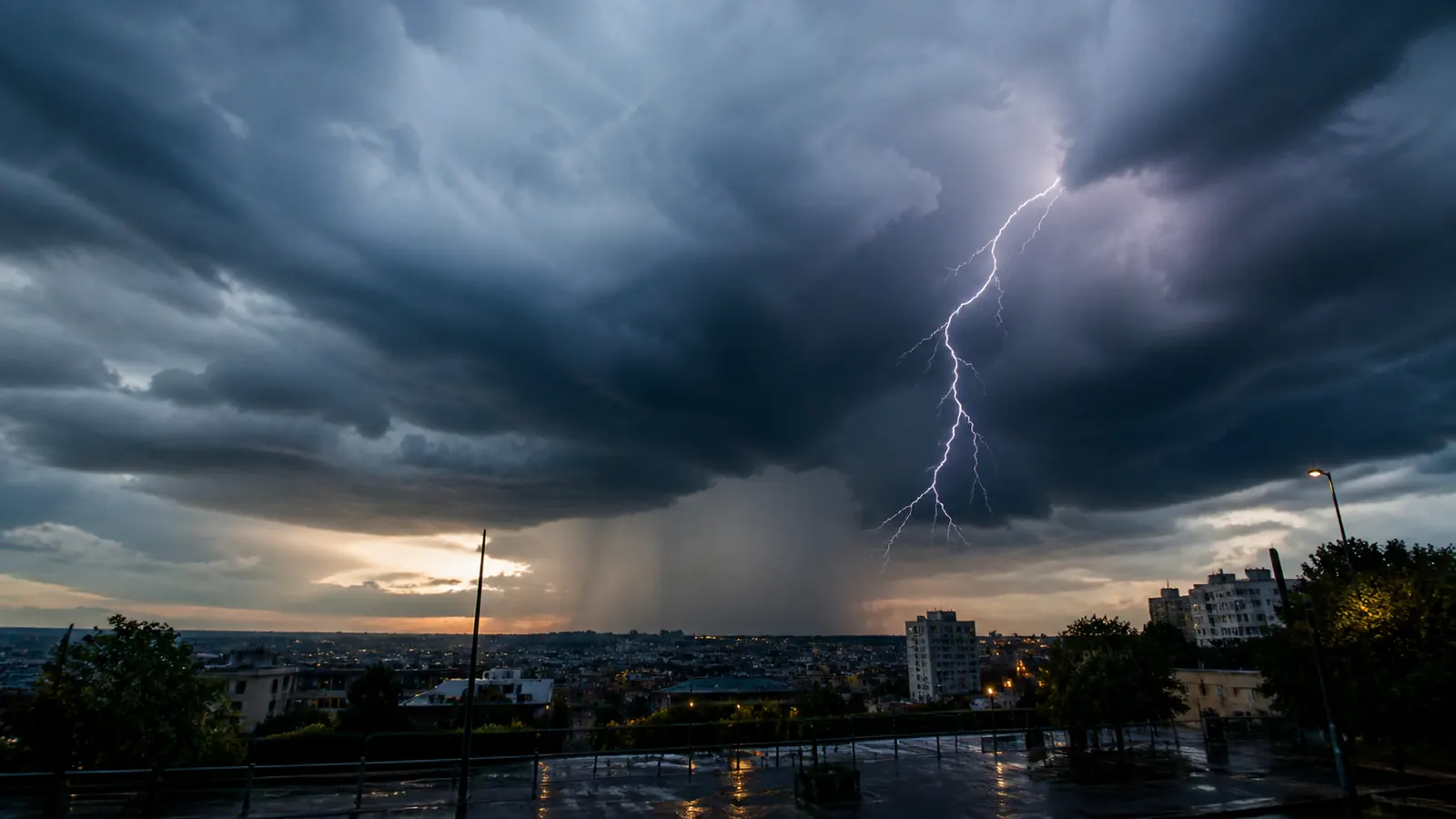
On August 21, 2026, a marked thunderstorm episode hit the Southeast and Corsica, in the context of an already grueling summer. The claim that Météo-France placed these areas under an orange thunderstorm and rain-flooding warning, with concrete consequences on networks and transport, is circulating widely. Here is the state of the evidence after cross-checking bulletins, prefectural communiqués, Enedis, SNCF and established media. Why the topic is circulating The alert came in the middle of the tourist season, after days of heat and fires. The media followed live the nocturnal and morning thunderstorm passages, the preventive evacuations and the traffic disruptions. Images of water torrents and testimonies from stranded travelers amplified the buzz. Origin and established facts on the warning Météo-France did place the two Corsican departments (Haute-Corse and Corse-du-Sud), the Var and the Alpes-Maritimes under an orange warning for thunderstorms, and often jointly for rain-flooding, on Friday, August 21, 2026. The alert was active from the previous night or very early in the morning (around 2 a.m. for the Var and the Alpes-Maritimes, 6 a.m. for Corsica) and maintained until about 10 a.m. It was lifted first in Corsica in the early morning, then for the Var and the Alpes-Maritimes. Bulletins and lives from TF1 Info, Franceinfo, Ouest-France, L’Indépendant and the Météo-France vigilance website confirm this. Corsican prefectures relayed the information and took measures: ban on access to massifs, waterways and trails, preventive sheltering of more than a thousand people in outdoor hospitality facilities. Météo-France anticipated a marked thunderstorm passage with violent gusts (generally 100-120 km/h, locally higher in western Corsica), heavy rain intensities (30 to 50 mm in a short time, with higher local accumulations), significant electrical activity and risk of hail. Observed accumulations reached 65 to 80 mm in places (for example around 78 mm in Levens, 80 mm in Seillans). Observed consequences: rains, gusts, electricity and transport The torrential rains and gusts did occur. Violent thunderstorms swept across Corsica from west to east and hit southern PACA. Rescue interventions took place for lightning strikes on trees or lines. A campsite in a risk zone in Pégomas (Alpes-Maritimes) was evacuated (more than 200 vacationers). Flights were canceled from Ajaccio and Bastia. On electricity, Enedis indicated that at the height of the episode, up to 26,000 customers were without power in the Var and the Alpes-Maritimes. The figure quickly dropped (about 1,000 customers still affected around 7 a.m. on August 21 in Toulon, Sainte-Maxime, Claviers and Seillans), thanks to automatic restorations and mobilized teams. Prefectural sources and France 3 Régions confirm this. No major casualty toll was reported in the immediate term for these departments. On the rail side, a Hendaye-Paris TGV (which left on August 20) did accumulate up to 11 hours 30 minutes of delay (arrival Friday morning around 8:30-8:40 a.m. instead of the previous evening). SNCF Réseau and SNCF Voyageurs attribute the immobilization (between Ychoux and Morcenx in the Landes) to a power supply failure “very probably caused by lightning.” Passengers spent part of the night stranded then at Bordeaux station before resuming. Regional TER disruptions also affected the Southwest. Franceinfo, Le Parisien, Ouest-France, Sud Ouest and BFMTV report these facts in a convergent manner. The thunderstorm episode was broader than just the orange departments of the Southeast: thunderstorms hit other regions the day before and the same day. What is accurate, exaggerated or to be nuanced The central part of the claim (placement under orange warning of Corsica, Var, Alpes-Maritimes on August 21, 2026 for thunderstorms and rain-flooding, subsequently lifted for some) is accurate and documented by the primary source Météo-France and the press. The torrential rains, strong gusts and power outages are confirmed, with precise figures from Enedis. The significant rail delays do indeed exist, including the emblematic case of the Hendaye-Paris TGV at 11 hours 30 minutes. Important nuances: the TGV in question was not running in the departments placed under orange (Corsica/southern PACA) but in the Southwest, where lightning linked to the same thunderstorm flow struck. The claim links all the consequences to the southeast/Corsica orange warning somewhat broadly, whereas the episode was nationally more extensive. Major structural damage or catastrophic flooding do not appear as massive in the initial assessments of the orange zones; the authorities mainly emphasized prevention and localized impacts (roofs, trees, electrical network). The accumulations and gusts match the forecasts, without systematically exceeding the most extreme thresholds announced everywhere. Contradictions and blind spots Few frontal contradictions between sources. The exact lifting times vary slightly depending on the lives (Corsica earlier, Var/AM until 10 a.m.). Some headlines insist on “four departments” (the two Corsican ones + Var + Alpes-Maritimes), others mention extensions or adjacent yellow zones. The definitive assessments of damage, costs or exact number of firefighter interventions are not all consolidated in the first hours. The precise causal link between each outage and the local orange warning sometimes remains generalized in the summaries. The presumption of innocence and privacy are not at issue here; this is a collective weather event. Broader context This episode fits into a 2026 summer marked by heatwave, drought and fires. The thunderstorms brought thermal relief but also risks of runoff on dry soils. The authorities recalled the classic instructions (avoid travel, take shelter, do not venture onto flooded roads). Provisional conclusion The claim is generally well-founded and proportionate. Météo-France did issue the indicated orange warning on August 21, 2026; it was subsequently lifted for the areas concerned. The torrential rains, gusts, power outages (peak at 26,000 households) and major rail delays (including 11 hours 30 minutes on the Hendaye-Paris TGV linked to lightning) are established by multiple independent official and journalistic sources. The only reservation concerns the direct linking of the southwest TGV delay to solely the orange departments of the Southeast and Corsica: it stems from the same broad thunderstorm episode rather than a strictly local consequence. No major invention appears. The information remains subject to being refined by subsequent assessments from Enedis, SNCF or the prefectures.