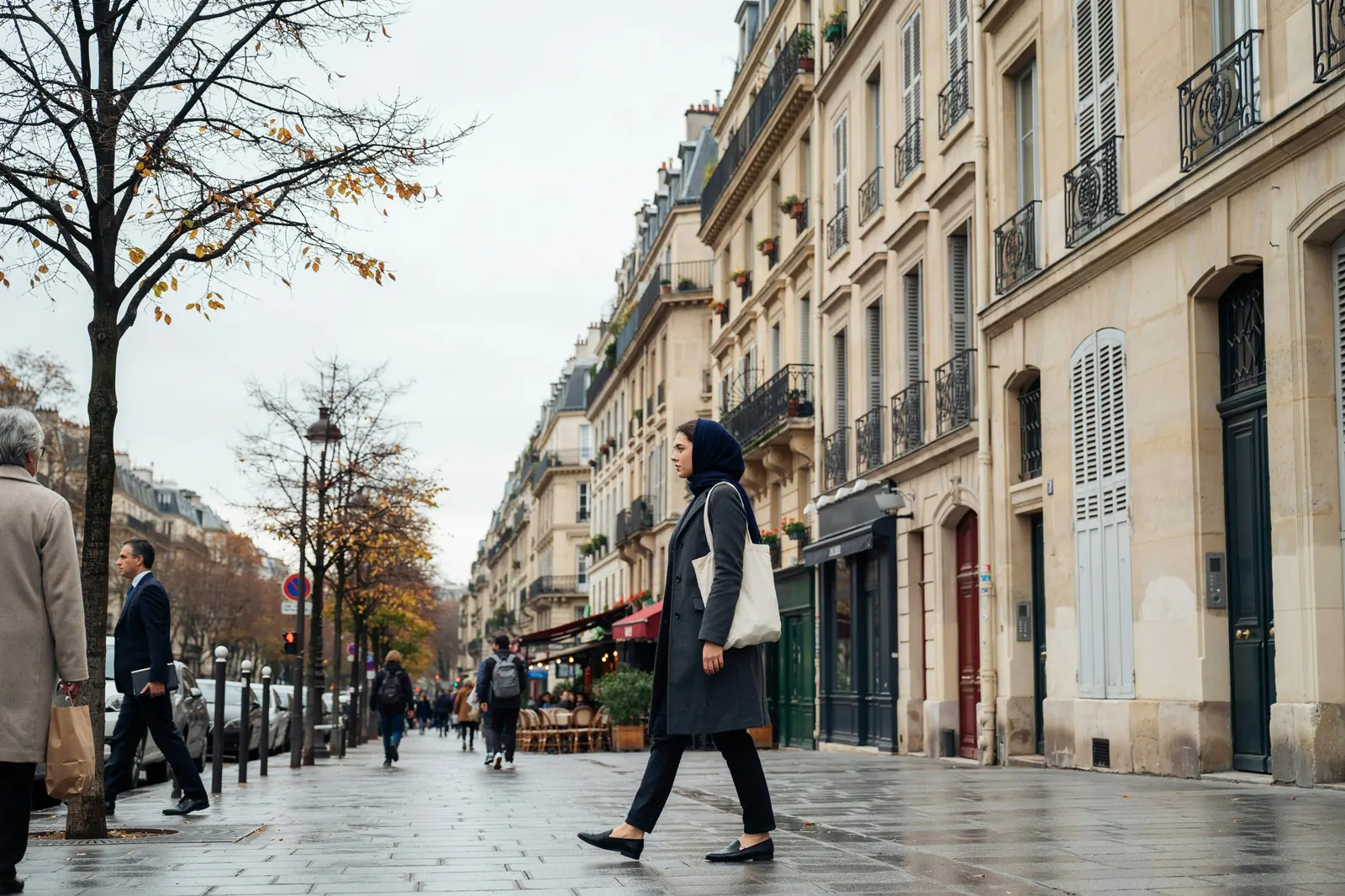
The headline hits hard. Sixty percent of French people believe the wearing of the Islamic veil in public space should be banned. CNews puts it out, Europe 1 and the JDD too. The CSA institute has spoken. And right at the moment when the RN puts the subject back on the table for the 2027 presidential election.
The fact is simple. A CSA poll for Europe 1, CNews and the Journal du dimanche, published around September 1, 2026, gives 60% in favor of banning the veil in the street, parks and public places. It is down. At the end of November 2025, the same type of survey showed 69%. On the fine to sanction wearing it, 53% say yes, 47% no. Young people aged 18-24 hold back: only 39% for the ban. On the left, 30%. On the right and among RN-Reconquête sympathizers, it climbs to 81-92%. The presidential majority splits around 47%. Here are the figures as they circulate.include renderinlinecitation with citationid is 1include renderinlinecitation with citationid is 4
Where does the noise come from? Sunday, August 30, Jean-Philippe Tanguy, RN MP, announces on BFMTV: we will sanction the wearing of the veil, a fine like for the seat belt. Marine Le Pen drives the point home the next day on X: a referendum on a major law against Islamist ideologies, with penalization of the Islamist veil in public space. The party is replaying a classic of its campaigns since 2012, after back-and-forths. The political class is choking. Populism, unenforceable, clothing police, attack on freedom, radical disagreement. Bruno Retailleau talks of populism. Jean-Luc Mélenchon of ignoble. Even on the right, people balk at the realism. Veiled women, for their part, speak of an attack on freedom. The buzz is served.include renderinlinecitation with citationid is 15include renderinlinecitation with citationid is 40
What is established: the poll was indeed published by the group's media outlets. CSA uses its usual method, online panel, quotas, sample of around a thousand people. Classic margin of error, on the order of three points. The age and political proximity divides have been stable for years. Similar surveys, often the same commissioners, have oscillated around 60% since 2022. The 2010 law already bans face concealment. The hijab, no. French-style secularism regulates schools and public services, not the street for citizens.include renderinlinecitation with citationid is 0include renderinlinecitation with citationid is 3
What is exaggerated or incomplete: presenting the 60% as a unanimous plebiscite. It is falling. Young people and part of the left say no. A fine only convinces 53%. Enforceability? Lawyers and politicians, including on the right, raise the Constitutional Council, equality between religious symbols, the kippah, nuns' headscarves, the ECHR. A referendum on the subject runs up against the contours of article 11. And then CSA belongs to the Bolloré ecosystem, like CNews, Europe 1 and the JDD. Short circuit: they commission, they poll, they broadcast, they comment. That does not invalidate the figure. It invites looking at it without rose-tinted glasses.include renderinlinecitation with citationid is 61include renderinlinecitation with citationid is 49
The blind spots remain striking. How many women actually wear the veil? Estimates vary, around several hundred thousand according to some surveys. Social pressure or choice? Mass-public polls hardly settle it. The RN has changed its stance several times. Bardella sometimes softens the “clothing police.” Opinion can want something in theory and stall before implementation. A percentage is not a law, still less a police force.
At bottom, the file looks like those debates that return like the seasons. The 60% figure is not invented. It exists, it is sourced, it is in decline. It serves as a crutch for a political proposal that divides even those who carry it. One smiles: the buzz balloon inflates with a house poll, deflates a little, and the table conversation resumes. The French, for the most part, say they want the ban. Knowing whether they really want to see it applied, and how, is another story. The verdict remains open. The evidence states the percentage. It does not yet state the day after.

Profile
Georges Darmond
Journaliste politique mediasJe m'appelle Georges. Je suis née dans la région parisienne où j'exerce mon métier de journalisme depuis 1 an dans le domaine du de la politique, médias, social. Aujourd'hui, je m'intéresse tout particulièrement à aux promesses non tenues, aux fausses informations, aux affirmations douteuses qui influencent notre quotidien, nos espoirs et notre espérance dans le futur.
LinkedIn ↗